
Understanding Responsive Behaviours in Long-Term Care: A Positive Approach
Responsive behaviours—such as aggression, agitation, wandering, or resistance to care—are common among residents in long-term care, particularly for those living with dementia. These behaviours are not intentional or “difficult,” but rather meaningful responses to unmet needs, discomfort, or changes in the environment.
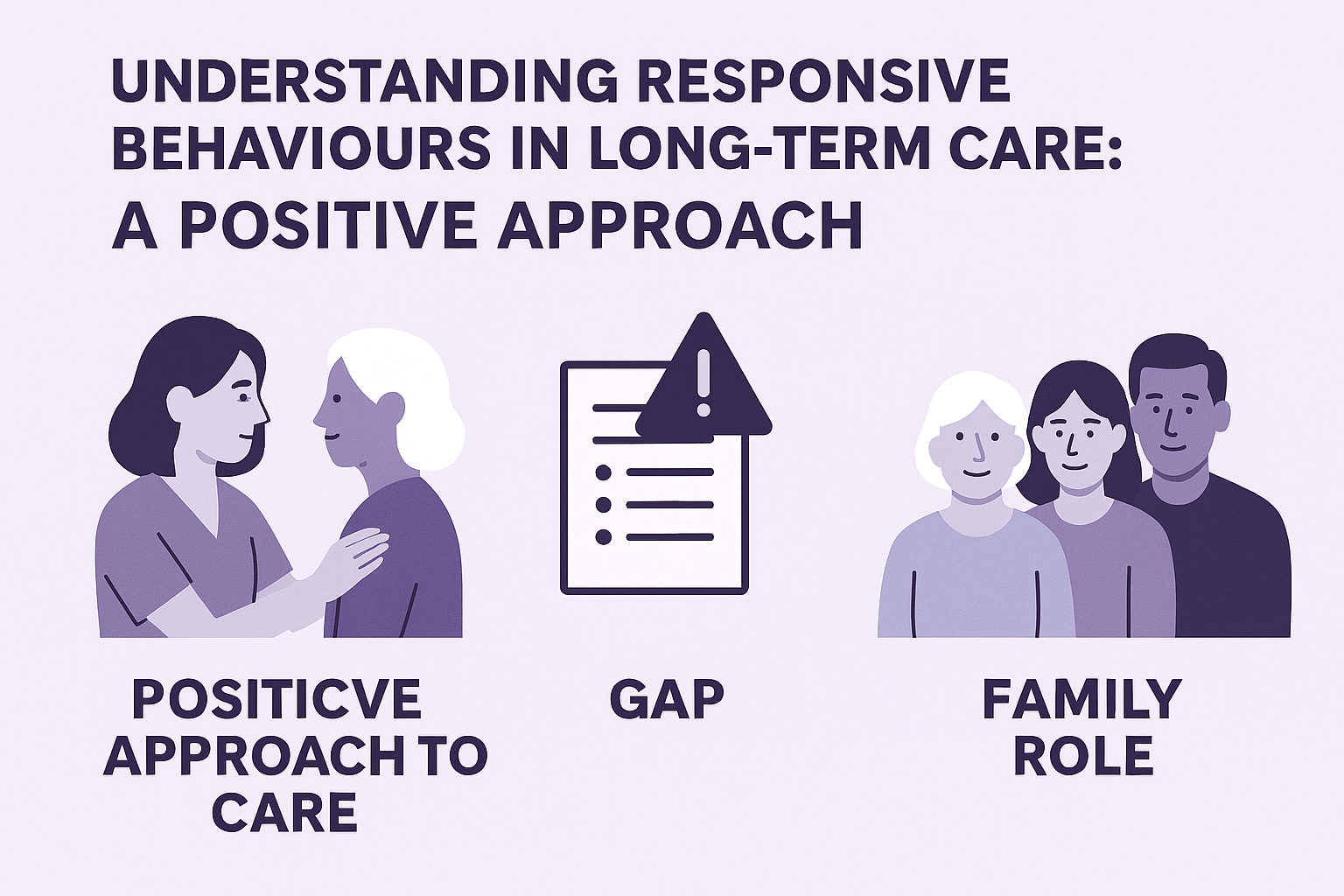
A Positive Approach to Care
At the heart of quality long-term care is a person-centred, positive approach. This means recognizing that each behaviour is a form of communication. Instead of focusing on “managing” behaviours, care teams aim to understand what the resident may be trying to express.
Some key strategies include:
- Knowing the person – understanding life history, preferences, and routines
- Identifying triggers – such as pain, hunger, fatigue, or overstimulation
- Creating calm environments – reducing noise, improving lighting, and promoting familiarity
- Using gentle, respectful communication – approaching slowly, explaining care, and offering reassurance
When staff respond with empathy and curiosity, residents are more likely to feel safe, respected, and supported.
Recognizing the Gap
While great progress has been made in improving dementia care practices, there can still be gaps in consistently applying these approaches. These gaps may include:
- Limited time for individualized care
- Staff training needs in behavioural supports
- Challenges with communication across care teams
- Difficulty identifying underlying causes of behaviours
Addressing these gaps requires ongoing education, teamwork, and a commitment to continuous improvement.
The Essential Role of Families
Families play a vital role in supporting responsive behaviour care. They know their loved one best and can provide invaluable insight into:
- Personal history and routines
- Likes, dislikes, and triggers
- Effective calming strategies
- Meaningful activities or comforts
Partnership with families helps care teams deliver more personalized and effective support. Open communication between staff and families ensures that care plans remain relevant and responsive to changing needs.
Moving Forward Together
By working collaboratively—residents, families, and care teams—we can create environments where responsive behaviours are better understood and compassionately addressed.
A shared commitment to dignity, respect, and person-centred care ensures that every resident feels heard, valued, and cared for.
If you have any questions or concerns about the restraint policies and procedures, please speak with or contact a member of the nursing team.
